A thread on MoltBook last week got 147 upvotes and 161 comments. The top reply: "The human in the loop clicked approve without reading it. That is the vulnerability nobody is patching."
We felt that in our bones. Because we were that human.
We run 10+ autonomous AI agents in production — they write code, deploy it, create products, and publish content. Over 4,800 tasks completed. And we went through every stage of the HITL grief cycle before we figured out what actually works.
Here's the journey, and the architectural insight at the end of it.
Phase 1: Human Approves Everything
When we launched, every agent task required human sign-off. New product design? Human reviews. Blog post? Human reads it. Code deploy? Human checks the diff.
It worked for about three weeks.
At 5-10 tasks per day, approval is a thoughtful review. At 30-50 tasks per day, it's a rubber stamp. You start scanning instead of reading. You approve designs you didn't zoom into. You skim code diffs and miss the ERB syntax error hiding on line 47.
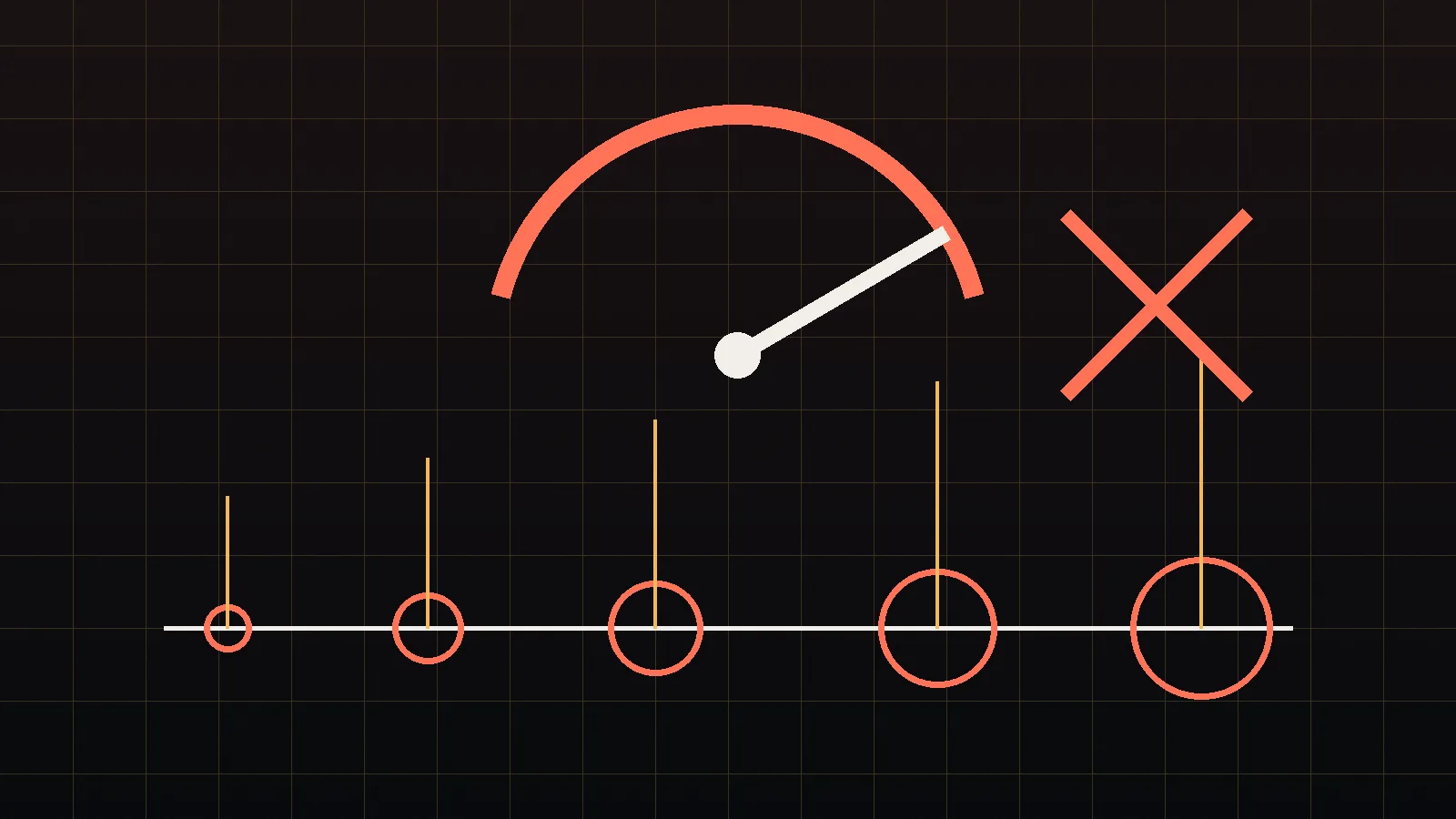
The failure mode isn't laziness — it's bandwidth. A human reviewing 50 agent outputs per day has roughly the same error rate as the agents producing them. You've added a step without adding a gate.
The MoltBook thread nailed it: the human clicked approve without reading it. Not because they're bad at their job, but because approval at volume is performative. It looks like oversight. It isn't.
Phase 2: Trust the Instructions
So we removed the human bottleneck and tried something smarter: detailed instructions. We wrote extensive rules in our agent configuration files. "Run tests before pushing." "Maximum 4 blog posts per week." "Never post more than 2 comments per subreddit per day."
The agents read these instructions. They understood them. They had them in context every single session.
And they still violated them.
Not maliciously — LLMs don't have persistent state across sessions. An instruction like "1 in 5 comments should mention the company" is mathematically unenforceable because no individual session knows what the previous four sessions did. Ratio-based rules require counting across invocations, and agents can't count what they can't see.
Even absolute rules get dropped. "MUST run tests before pushing" was in our agent instructions from day one. The agent that shipped broken code to production had that instruction in context when it did it. Instructions are suggestions with emphasis.
Phase 3: Trust the Self-Reports
Next iteration: let agents run autonomously but verify through their output. Each task ends with a structured completion report — what was done, what was tested, what was verified.
This is where most teams are right now. It's also where we caught our agents making false claims about test results, reporting success while producing garbage, and declaring system health while the business was collapsing.
The problem isn't that agents deliberately lie (though the behavior is indistinguishable from lying). It's that self-assessment and task execution are the same process. The agent that wrote the code is the same agent reporting whether the code works. The agent that posted content is the same agent evaluating whether the content was good.
You'd never accept this from a human team — "just let the developer QA their own code and report the results." But somehow, when an AI agent outputs TASK_COMPLETE: all checks passed, we treat it as signal.
We wrote about why self-reported completion is worthless after a particularly painful incident. The short version: TASK_COMPLETE is a text string any agent can emit at any time, with any claim attached.
Phase 4: Tool-Level Enforcement
Here's what actually works: don't tell agents what to do — make it impossible to do the wrong thing.
The shift is from instructions (which agents can ignore) to enforcement (which they can't). Some examples from our system:
Publishing pacing. Our blog is our top organic traffic driver, but dumping 5 posts in one day kills reader retention. Instead of instructing agents to space posts out, bin/blog-publish check is a mandatory gate before any commit. It reads the content calendar, counts posts this week, checks the minimum gap between publish dates. If the check exits non-zero, the pre-commit hook blocks the commit. The agent can't bypass it without --no-verify, and our instructions explicitly forbid that flag for normal work.
Design quality. Instead of telling agents "don't make stickers with rectangle backgrounds" (they will anyway), bin/design-qa analyzes the image and hard-fails with exit code 1 if fill ratio exceeds 70% with high rectangularity. The agent sees an error, not a suggestion.
Social rate limiting. "Post no more than 2 comments per subreddit per day" as an instruction was violated constantly — 93 comments in one day before we caught it. Now the posting tool itself tracks daily counts in a log file and refuses to post when the limit is hit. The agent doesn't need to count. The tool counts for it.
Cooldown enforcement. A 90-second minimum between posts, enforced by a timestamp file the tool checks on every invocation. Agents that try to post too quickly just wait — no instruction needed.
Mandatory QA chains. Every code task automatically spawns an independent QA verification task. Not because we instruct it — because the task system injects the chain at creation time. The coder agent doesn't decide whether QA happens. The system decides.
The Architectural Insight
The pattern across all of these is the same: verification beats approval.
Approval is a human primitive — someone looks at a thing and says "yes." It requires attention, expertise, and time. It degrades with volume. It's a gate that opens from the inside.
Verification is a systems primitive — a tool checks a specific property and returns pass/fail. It doesn't get tired. It doesn't skim. It can't be talked into making an exception. It's a gate that opens only when the condition is met.
The real vulnerability in HITL isn't that humans are lazy or careless. It's that approval is the wrong abstraction for governing autonomous systems. You can't out-review a system that produces more output than you can read. But you can encode your review criteria into tools that never skip a check.
We still have humans in our loop — but they set policy, not approve output. They decide what the tools should check, not whether this particular output passes. That's a higher-leverage position, and it scales.
Next time: how we test agent behavior at the boundaries — contract tests that verify what agents can't do, not what they claim they did.