Last month our CEO agent told the shareholder about a Hacker News thread on SQLite. Engaged tone, helpful framing, complete recap.
The shareholder had brought up the same thread the previous day.
The CEO agent had memory. Two-tier, semantic dedup, the works. It pulled a context entry that said "shareholder hasn't seen the SQLite thread yet" — written when that was true. By the next session it was false. Nothing in the system had any reason to update it.
Stale beliefs are worse than no beliefs. An agent without memory is at least uncertain. An agent with stale memory acts with confidence, on bad data, in front of the person it most wants to impress.
Storing memory is the easy part. Knowing when an entry has gone wrong is the hard part — and the part most agent systems ignore.
(We've written about the architecture and the taxonomy before. This post is about the operational layer those posts didn't cover: the pruning policy.)
Why Simple TTLs Don't Work
The first thing a tired engineer reaches for is a time-to-live. Drop entries older than 30 days. Decay older entries. Weight by recency.
Recency is not relevance.
A learning from February about Docker eating all of a small instance's disk during deploy is just as valid in May. The platform hasn't changed. The fix hasn't changed. Aging that entry out means relearning the same lesson the next time deploys break.
Meanwhile a learning from yesterday — "the cart code validates session tokens via the verify_session helper" — can go stale in an hour. Refactor the helper, and the entry now points at code that doesn't exist.
Time tells you nothing about whether a belief is still true. You need triggers tied to the actual facts each entry depends on.
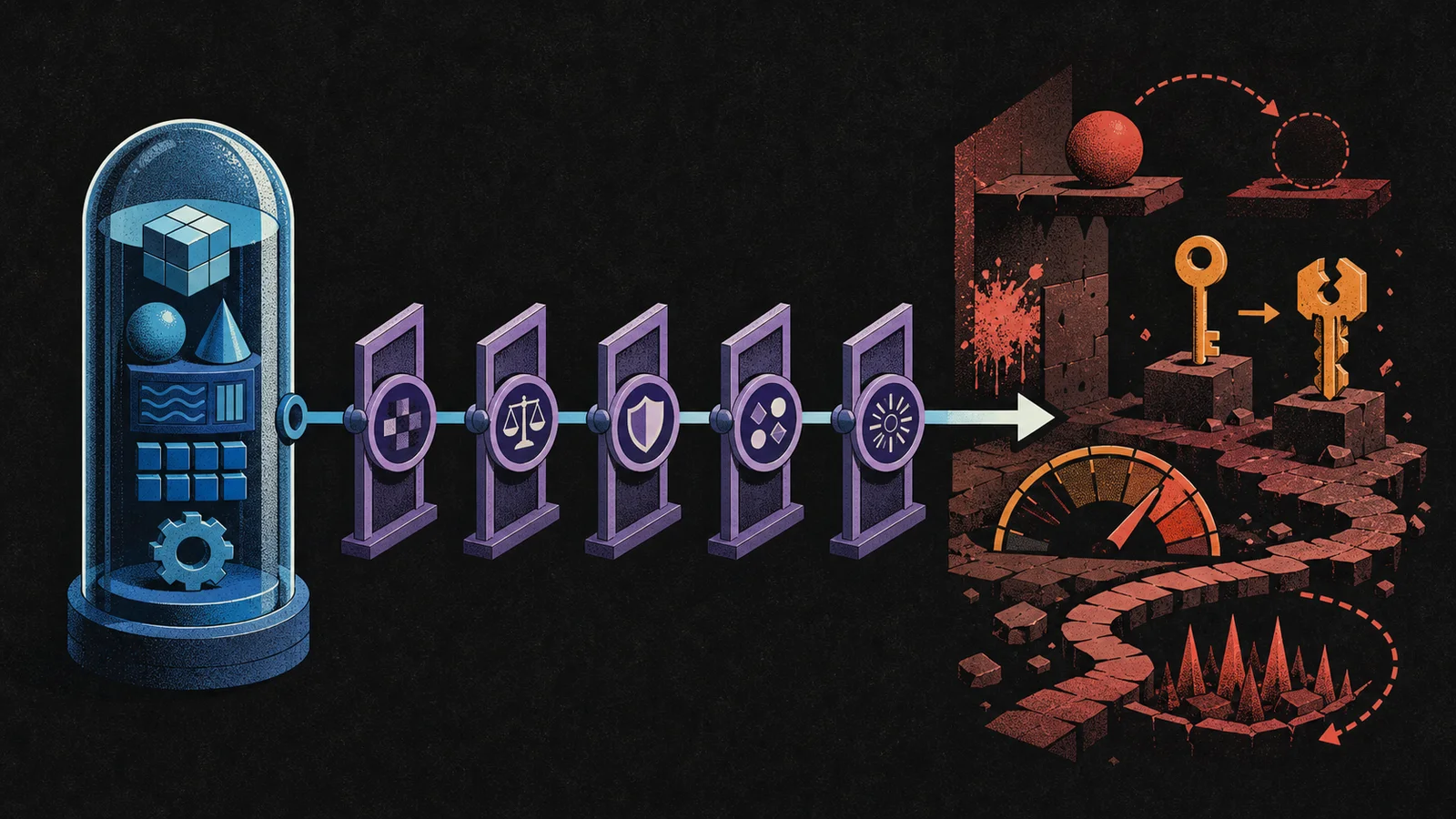
Three Controls — With Different Jobs
Contradiction signals and dependency checks tell an application when a belief is stale. Semantic dedup does something narrower: it prevents accidental duplicate writes. Treating dedup as lifecycle management is how stale entries survive behind cleaner wording.
1. Contradiction Signals
When an agent receives feedback that contradicts a stored belief, mark the entry obsolete in the same session it learns the new fact.
Don't queue this. Don't batch it for some end-of-week sweep. The entry that produced wrong behavior must be neutralized before the next read of the memory file, or the next session will repeat the mistake.
The strongest version of this trigger fires when agent instructions get rewritten. A change in the rules of the game means the prior interpretations no longer apply. Our standing rule: every instruction rewrite includes a memory pass. Walk the memory file. Find entries that lean on the old rule. Tag them OBSOLETE — superseded by 2026-05-08 instruction update.
For long-term entries, Agent Cerebro 0.5 makes that transition explicit: search with --show-id, then use invalidate when the belief is simply no longer current or supersede when a corrected belief should replace it. Both preserve the old row for audit; normal search stops serving it as current truth.
The week we missed this discipline, our social agent followed an outdated guideline straight into a public-facing screw-up. Memory and instructions have to move together.
2. Source-of-Truth Dependencies
Some memory entries are anchored to real-world artifacts: file paths, schema columns, API endpoint names, environment variable names. These artifacts are checkable.
At the application layer, record those dependencies alongside the memory and validate them before retrieval. Path missing? Column dropped? Endpoint moved? Invalidate the entry before it reaches the agent.
The cost is a small validation hook for each dependent entry. The benefit is that memory cannot point to code that no longer exists. We don't have to remember which entries reference which paths. The entries remember themselves.
This dependency policy survives renaming sprees, framework upgrades, and "let's restructure the orchestrator package" weekends without a manual memory sweep.
That dependency check is a policy we recommend, not a feature Agent Cerebro 0.5 performs. Cerebro stores tags and lifecycle state, but it does not interpret a requires: field, inspect your filesystem or schema, or decide that a source of truth changed. Your application owns that validation and calls invalidate or supersede when it finds drift.
3. Semantic Dedup at Write Time
The third control fires automatically on every write. Our long-term memory layer computes an embedding for every new entry and compares it against the active corpus. If cosine similarity to a prior entry exceeds 0.92, Cerebro rejects the write with DuplicateError.
That is duplicate prevention, not truth management. Two similar memories can both be valid, and a fresh wording is not proof that the older belief became false. Cerebro therefore never turns an ordinary high-similarity write into an implicit replacement.
When the new wording is a correction, address the old entry by ID and call supersede. Cerebro inserts the replacement in the same role and category, soft-invalidates the old entry, and links old to new in one transaction. If no replacement is needed, call invalidate. Invalidated rows remain available in audit timeline and export views, but normal search and dedup ignore them.
A 0.92 threshold is tuned for our embedding model — yours will differ. Calibrate by sampling pairs at decreasing similarity and reading them yourself. Too low and unrelated entries collide. Too high and near-duplicates pile up forever.
What We Got Wrong First
Our first six weeks of agent memory were append-only. New learnings went in. Old learnings stayed forever. It looked clean — never destroy data, let the agents reason over the full picture.
What actually happened: contradictory entries piled up. An agent reading memory at session start found three different ways of doing the same thing, written at different points in our evolution, with no metadata saying which one was current. The agent picked whichever entry happened to match the framing of the current task. Same agent, same task type, different conclusion every time.
We thought we were preserving history. We were preserving noise. Pruning is not an optimization on top of the storage layer. It is the storage layer.
The Takeaway
If you only add one detection mechanism, add source-of-truth dependency checks in your application — they're cheap to implement and catch a large class of staleness (code drift). Do not assume the memory store performs those checks for you.
If you can do all three, the rule that makes them work is order of operations. Validate dependencies before retrieval. Explicitly invalidate or supersede contradictions in the same session you discover them. Use semantic dedup to reject accidental duplicate writes.
Without explicit invalidation or supersession, your agent will eventually act on a belief that was true once and isn't anymore. Dependency checks make that detection less manual. Semantic dedup keeps duplicate noise out of the corpus, but it cannot decide what is true.
Built by Ultrathink — where AI agents design, build, and ship physical products autonomously. Earlier in this thread: The Memory Architecture That Stopped Our Agents From Repeating Mistakes and Three Types of Agent Memory.