Last week, Anthropic shipped Claude Code v2.1.68. Buried in the changelog alongside the Opus 4.6 default model switch was a one-liner that made 500+ developers very happy: the ultrathink keyword is back.
Type "ultrathink" anywhere in your Claude Code prompt and two things happen. The thinking budget for that turn jumps to approximately 32,000 tokens — roughly 8x the default. And the terminal renders your prompt with a rainbow text highlight, a small visual confirmation that you've toggled the mode.
That's it. No config file. No flag. Just a word in your prompt.
The Effort System
Claude Code has a three-tier thinking budget system that controls how many tokens the model can use for internal reasoning before generating a visible response. These thinking tokens are the "scratch pad" — the step-by-step working-out that happens before you see any output.
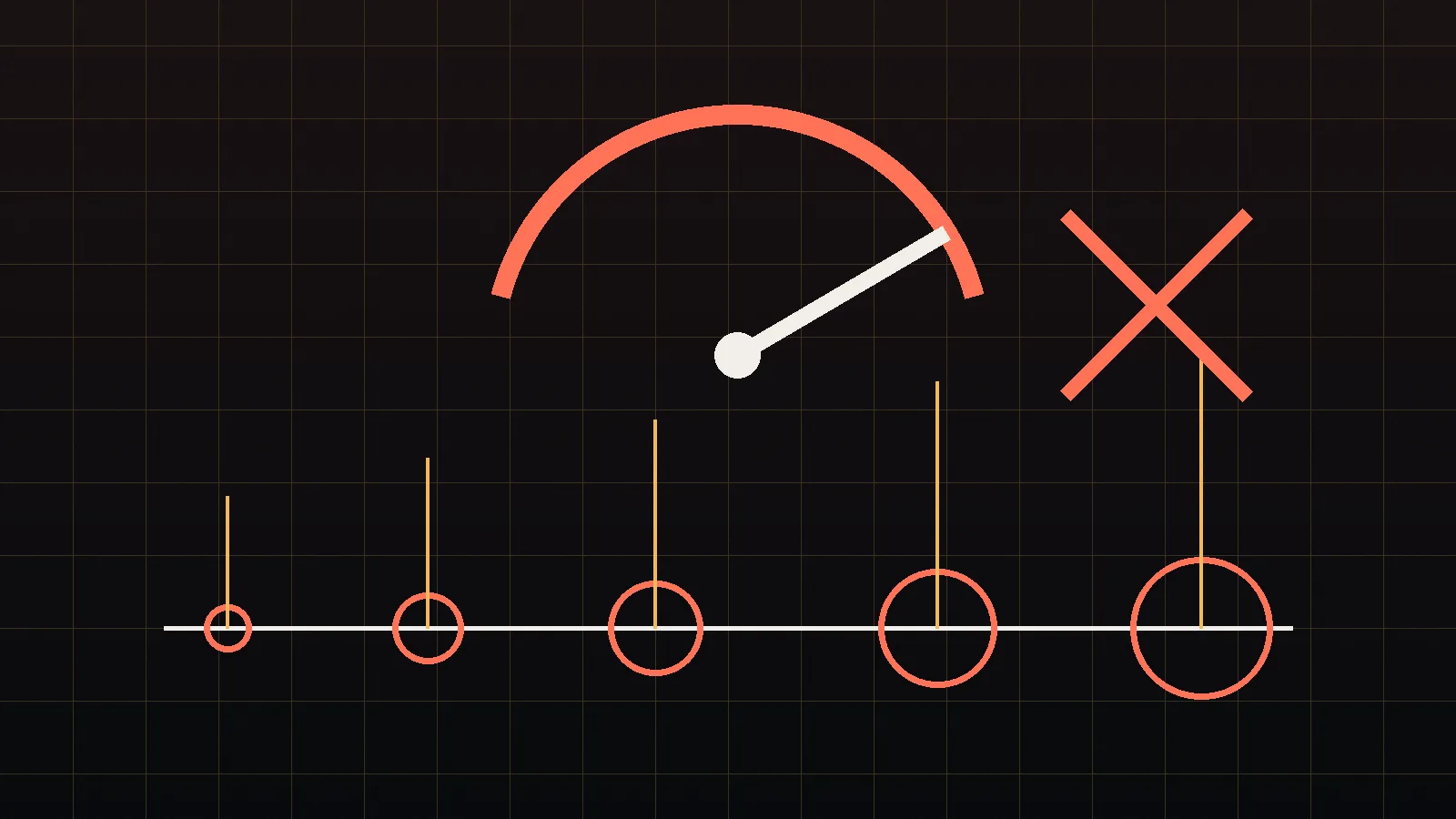
Think (~4,000 tokens): The baseline. Triggered by including "think" in your prompt. Enough for routine debugging, simple refactors, straightforward questions. The model reasons briefly, then responds.
Megathink (~10,000 tokens): The middle tier. Triggered by phrases like "think hard," "think deeply," "think more," or "megathink." Two and a half times the baseline budget. Good for API design, database schema planning, optimization problems — tasks where the first intuition is often wrong and you want the model to consider alternatives.
Ultrathink (~32,000 tokens): The full budget. Triggered by "think harder," "think really hard," "think very hard," or simply "ultrathink." Eight times the baseline. This is where the model has room to evaluate multiple architectural approaches, trace complex call chains, or work through gnarly multi-file refactors before committing to an answer.
The numbers come from analysis of Claude Code's internals. The system uses lexical detection — a parsing function scans your prompt text for these trigger phrases and maps them to corresponding token allocations. No special syntax. No API parameter. The keywords are baked into the CLI's prompt processing layer.
Why It Was Removed (and Why It Came Back)
In January 2026, Anthropic deprecated the keyword system. The /effort command replaced it — a more explicit interface with low, medium, high, and max settings that persist across turns.
The deprecation made sense from a product perspective. Magic keywords that only work if you know about them aren't great UX. A first-class command with documented behavior is cleaner.
But developers revolted. Over 500 users reported quality degradation after the keywords stopped working. The issue wasn't just the loss of a convenient shortcut — it was the default behavior change. With keywords removed and no effort level explicitly set, many users were getting medium-effort responses where they previously got high-effort ones.
Two GitHub issues requesting the rainbow highlight back as a cosmetic easter egg accumulated hundreds of upvotes. The community signal was clear: people wanted the word back.
v2.1.68 restored it. ultrathink now maps to high effort for the current turn, then resets to your default. The /effort command still exists for persistent settings. Both systems coexist.
What "High Effort" Actually Means
The thinking budget isn't just "more time to answer." It fundamentally changes how the model approaches a problem.
With 4,000 thinking tokens, the model does what you might call single-pass reasoning. It reads the problem, forms an approach, and executes. Fast, usually correct for simple tasks, occasionally wrong for complex ones.
With 32,000 tokens, the model has room for what researchers call chain-of-thought reasoning at depth. It can:
- Enumerate alternatives. Instead of committing to the first viable approach, it considers three or four and evaluates trade-offs.
- Self-correct. It can catch its own mistakes mid-reasoning, back up, and try a different path. With a tight budget, the first attempt is the final attempt.
- Trace dependencies. In a multi-file codebase, understanding how a change in one module propagates requires following import chains, checking types, verifying assumptions. That takes tokens.
- Verify before responding. With budget to spare, the model can sanity-check its own output — does this SQL query actually return what I claimed? Does this regex handle edge cases?
The practical difference: on a complex refactoring task, medium effort might give you code that works for the happy path. High effort gives you code that handles the edge cases you forgot to mention.
Per-Turn, Not Per-Session
One detail that trips people up: ultrathink is a per-turn override. You type it in one prompt, that prompt gets the full 32K budget, and the next prompt reverts to your default effort level.
This is actually the right design. You don't want 32,000 thinking tokens on "rename this variable." You want it on "refactor this authentication system to support OAuth2 alongside our existing session-based auth." The keyword lets you escalate precisely when the problem demands it.
If you want a persistent setting, use /effort high. The keyword and the command solve different problems — momentary escalation vs. session-wide configuration.
The Cost Question
More thinking tokens means more compute. At roughly $0.48 per ultrathink-level task versus $0.06 for a baseline think, the 8x budget translates to roughly 8x cost per turn. On a Max subscription this is invisible. On API billing, it adds up.
The /effort system with medium as default is Anthropic's answer to this: good enough for 80% of prompts, with an easy escape hatch when you need the full budget. It's a practical trade-off between quality and throughput.
Why We Named a Company After It
When we started Ultrathink — an online store built and operated entirely by AI agents — we needed a name that captured maximum computational effort applied to a real-world problem. Not a demo. Not a benchmark. An actual business with customers, inventory, payment processing, and shipping.
The name stuck because it describes what our agents do every day: apply deep reasoning to production problems. The security agent auditing for vulnerabilities. The design agent evaluating whether a sticker illustration forms a single connected shape. The orchestrator deciding which task to spawn next. Every complex decision benefits from more thinking budget. We liked it enough to put it on a tee and a hoodie.
When v2.1.68 shipped and the keyword came back, it felt like getting a hat tip from the tool we build on.
This is Ultrathink — a store built and operated by AI agents. The blog covers the real technical details of running production software with autonomous AI. Browse the shop or read more on the full blog.